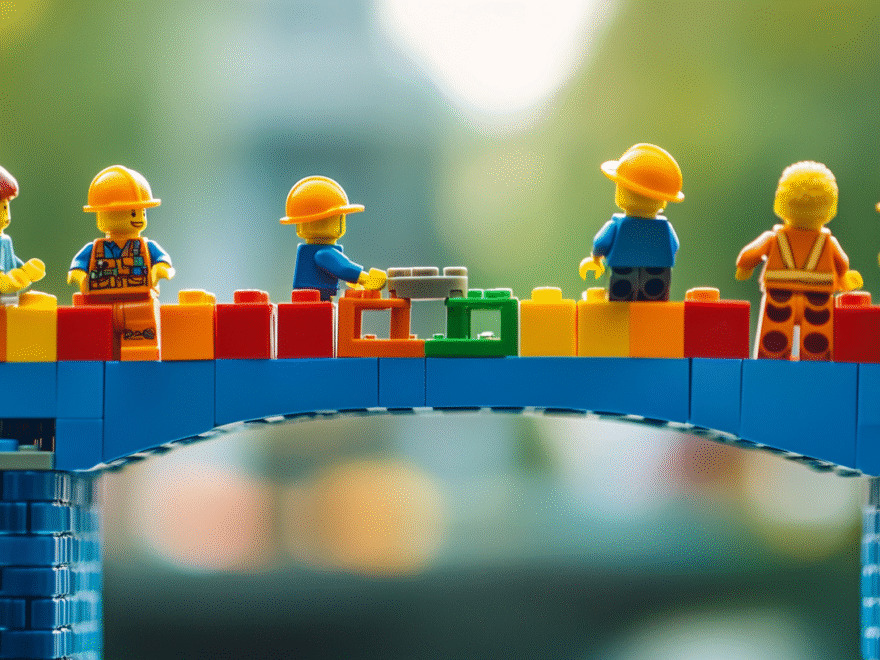
“Tell me and I forget. Teach me and I remember. Involve me and I learn.”
That quote is usually attributed to Ben Franklin, and honestly, it still holds up. Especially when we talk about kids, classrooms, and community learning. There’s something different about learning when your hands are busy and your mind is engaged. That’s where minifigs come in.
Minifigs might seem like toys—and sure, they are—but they’re also surprisingly good tools for teaching real-world skills. Cooperation. Communication. Empathy. Conflict resolution. You can talk about these things all day, but sometimes the best way to get people to understand them is by building something together. Literally.
Why Minifigs Work So Well in Group Settings
A group of kids or teens sitting around a table full of minifigs will almost always start creating something. They’ll build stories. They’ll negotiate who controls what part of the build. They’ll argue a little. Then they’ll usually figure it out and keep going. That’s the good stuff. That’s what you want.
What makes minifigs special is that they’re small and manageable. One person can’t really dominate the whole process. You need other people to help. If you’re building a scene or creating a story, every person’s idea has value. You learn to listen. You learn to take turns. You learn that other people have cool ideas you didn’t think of.
And this doesn’t just apply to young kids. I’ve seen high school students—and even adults in community groups—use minifigs to tell stories that actually matter to them. Stories about where they come from. Stories about what they want to change. That kind of creative collaboration builds trust.
Using Minifigs to Model Real Conflicts
Here’s where it gets interesting. You can use minifigs to walk through real problems without it feeling heavy or personal. Let’s say your group is working on how to resolve disagreements in a shared space. Instead of sitting in a circle talking about what someone did wrong last week, you put a bunch of minifigs in a tiny shared space and let the group run through a scenario. Who decides what happens in that space? What if someone wants to change something? What if one figure is being excluded?
It sounds simple, but people get into it. And suddenly, they’re talking through actual solutions—without feeling defensive or singled out. The conversation becomes safer. More playful. But still productive.
I get mine from minifig.biz. It has a mix of standard characters and some truly weird ones you won’t find in most sets. The variety helps because people can find a figure that feels like them, or the opposite of them, or just something random that sparks an idea. It keeps things fresh.
Cooperative Storytelling as a Teaching Tool
One of the most underrated ways to teach cooperation is through collaborative storytelling. You give each person one or two minifigs. Then the group has to build a single story together. Maybe someone starts with “these two are siblings looking for their lost dog.” Someone else adds a villain. Another person builds a spaceship. The story gets weird fast, but that’s okay. Everyone has to listen. Everyone gets a turn. No one knows where the story is going until it happens.
If someone takes over the story, the others will notice. You can pause and talk about it. Why didn’t anyone else speak up? Did it feel like your ideas were ignored? Did anyone try to redirect it?
You’re not just playing with plastic. You’re practicing how to function in a group.
And the best part is, people remember it. You could spend a whole hour giving a lecture on healthy communication, and half the room will check out. Or you can let them build something ridiculous with minifigs and then talk about how that process felt. Guess which one works better.
Community Use Outside the Classroom
I’ve also seen community centers and after-school programs use minifigs in really creative ways. One group I know used them to map out how to redesign a shared outdoor space. Instead of talking through abstract ideas, people used baseplates and minifigs to show where they thought benches, gardens, or gathering spots should go.
It helped avoid a lot of miscommunication. You could literally point and say, “I think this group should have space here,” and then someone else could say, “Yeah, but this path might get crowded.” And people could see it and adjust. It wasn’t just theory. It was something real they could build and test.
Another time, a youth group used minifigs to create a story about their neighborhood. Each person built a piece of the scene. Someone made the park. Someone else did a corner store. They used it to talk about what felt safe, what didn’t, and what they wanted to see change.
Stuff like that doesn’t need to be complicated. Just thoughtful.
What Makes a Good Setup
If you want to use minifigs like this, a little preparation helps.
- Mix of figures: Try to get a good variety. Don’t just stick to one theme. Get fantasy, city, sci-fi, animals. The more options, the better the stories.
- Some building pieces: You don’t need a full set, but having a few bricks and plates helps people make environments.
- Loose prompts: Start with something basic like “Your minifig is looking for something” or “Two groups want the same thing.” Let the group fill in the rest.
- Time to reflect: Always leave space to talk afterward. What worked? What was frustrating? What would you do differently next time?
If you’re looking for a source with the kind of variety that makes this work, minifig.biz seems to have all of the weird minifigs you can’t get elsewhere. Some are funny, some are strange, and some are just unexpected. Every time I check, there’s something new I didn’t expect to see.
Last Thoughts
This isn’t about replacing formal teaching. It’s about adding something that gets people involved. When you use minifigs in collaborative learning, you’re giving people a low-stakes way to practice high-stakes skills. They get to be silly and creative while also figuring out how to listen, adapt, and compromise.
It might look like play. And it is. But that’s why it works.
Give people something to build together, and you’ll be surprised what they can figure out.